
Post-Incident Assessment
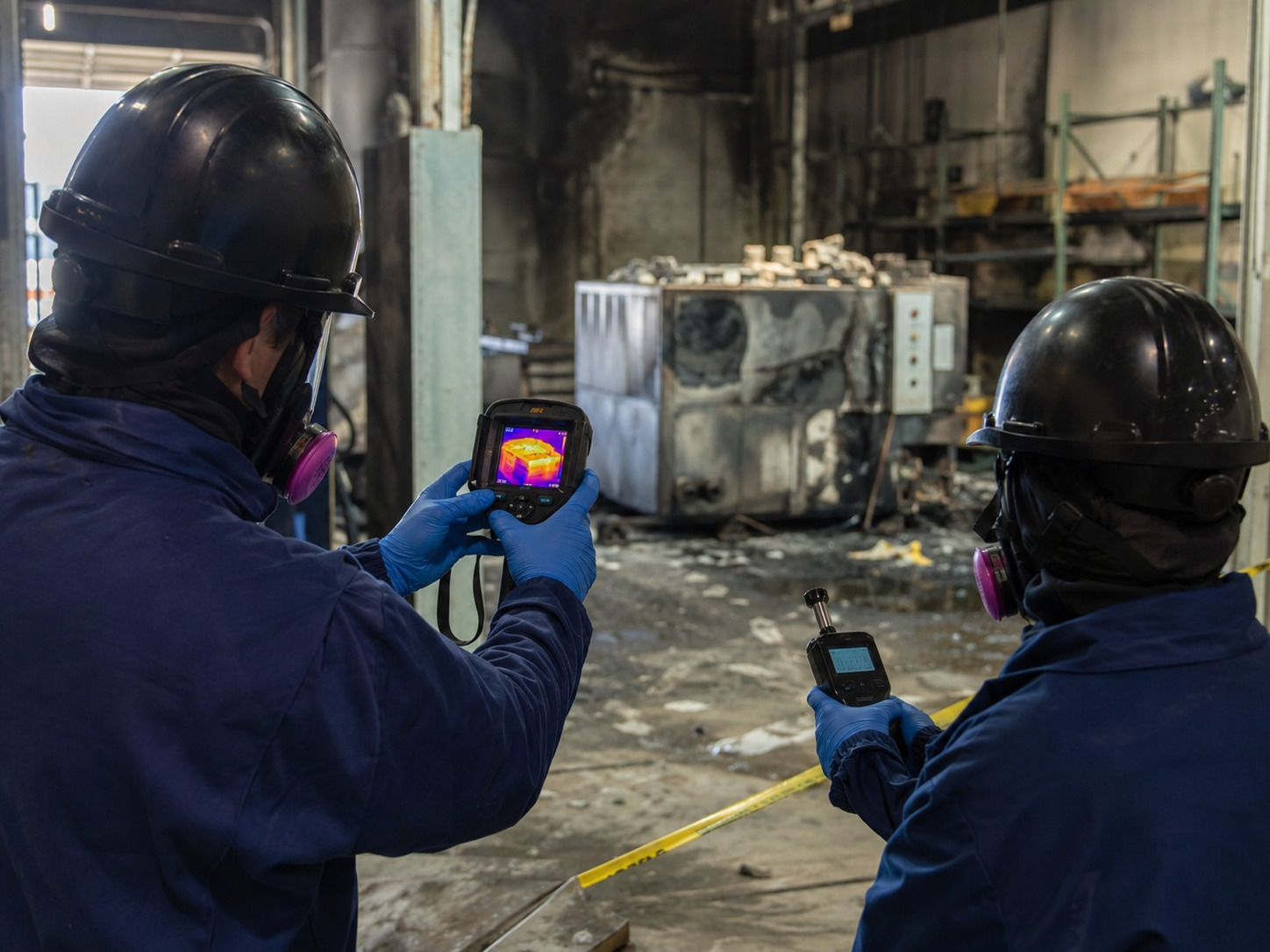
Thermal imaging and air monitoring guide safe re-entry before debris removal begins.

Rochester, NY & Surrounding Areas
Lithium-ion battery fires behave differently than ordinary structure fires—thermal runaway, toxic off-gassing, and re-ignition risk demand specialized response. Learn how Rock Emergency contains, monitors, and remediates commercial lithium fire losses safely.
Understanding the Service
Warehouses, EV charging areas, data centers, and manufacturing floors increasingly store lithium-ion batteries. When a cell enters thermal runaway, it can reignite hours or days after the initial event—and standard fire suppression may not fully stop propagation through adjacent packs.
Rock Emergency follows protocol-driven containment, continuous air monitoring, and phased debris handling so your facility can return to safe occupancy without hidden re-ignition or contamination risks.
STEP BY STEP
Tap each step to see what happens and why it matters for your facility.
Step 1 of 5
When you call, we gather details on the battery type, affected zone, ventilation, and whether the fire department has cleared the scene. A project lead is assigned and crews arrive with PPE and monitoring equipment sized for commercial lithium incidents.
Specialized response for lithium-ion fire losses.
Palletized cells, forklift batteries, and fulfillment-center energy storage require careful debris segregation and monitoring—we scale crews to your floor plate.
Charging stations, service bays, and parking structures need containment that accounts for adjacent vehicles and high-traffic zones.
Server rooms and electrical rooms demand minimal additional damage during cleanup—we coordinate with facilities and IT teams on access and air quality.
Production lines with embedded battery packs need phased remediation so unaffected lines can restart when safe.
Do not treat these like ordinary fire residue.
Swollen, smoking, or ruptured lithium-ion cells or packs
Re-ignition or heat returning hours after initial suppression
Hissing, popping, or off-gassing in a battery storage area
EV, forklift, or UPS battery involved in a structure fire
Corrosive residue or unusual odor near charging equipment
Fire department cleared the scene but debris remains on site
Myth
Once the fire is out, the danger is over.
Fact
Lithium cells can re-enter thermal runaway long after visible flames are gone. Monitoring and proper debris handling are essential before re-occupancy.
Common situations on this type of job—and how we address each one.
Thermal imaging and air monitoring guide safe re-entry before debris removal begins.
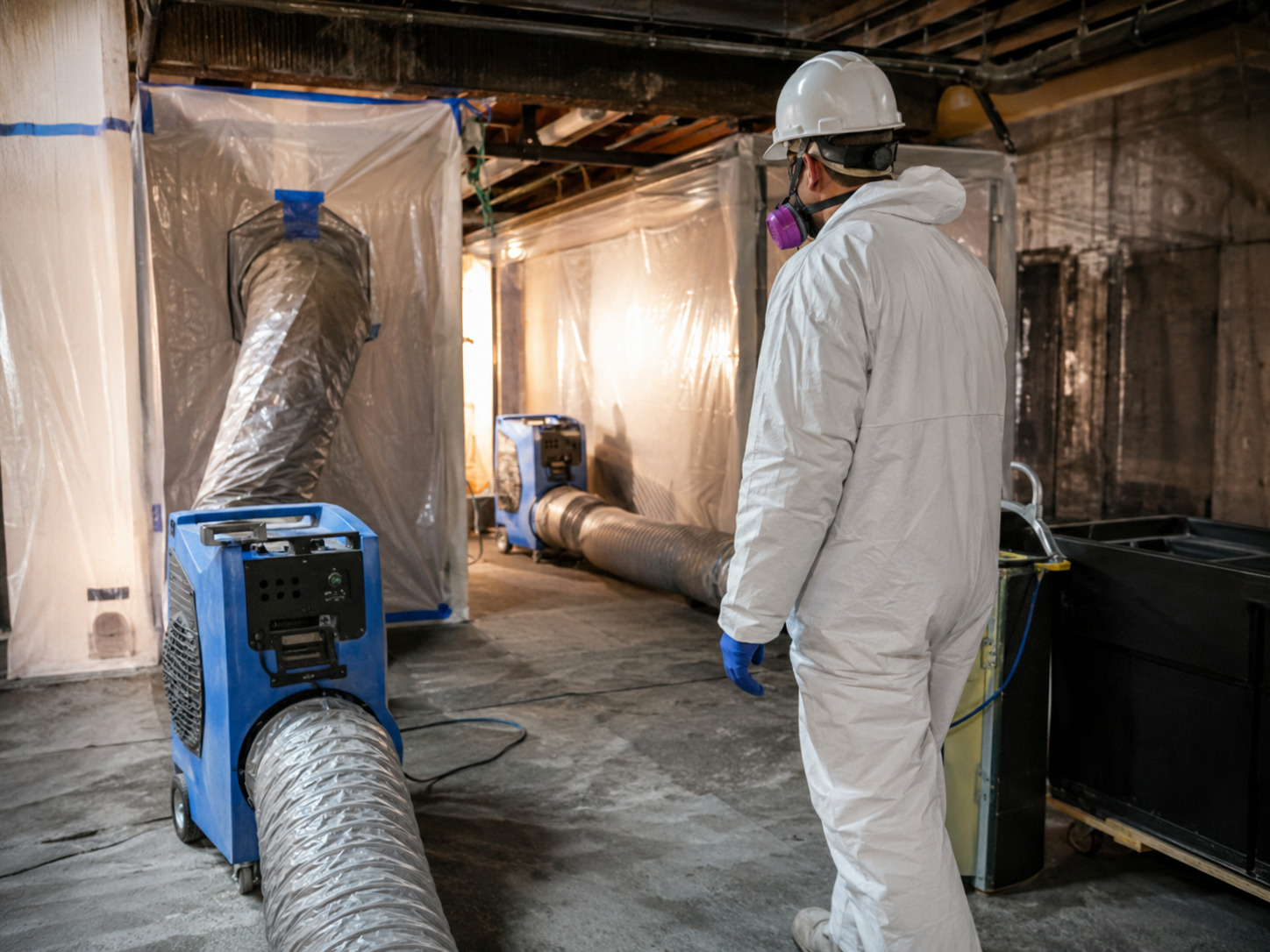
HEPA scrubbers run continuously during cleanup to protect workers and adjacent occupied areas.
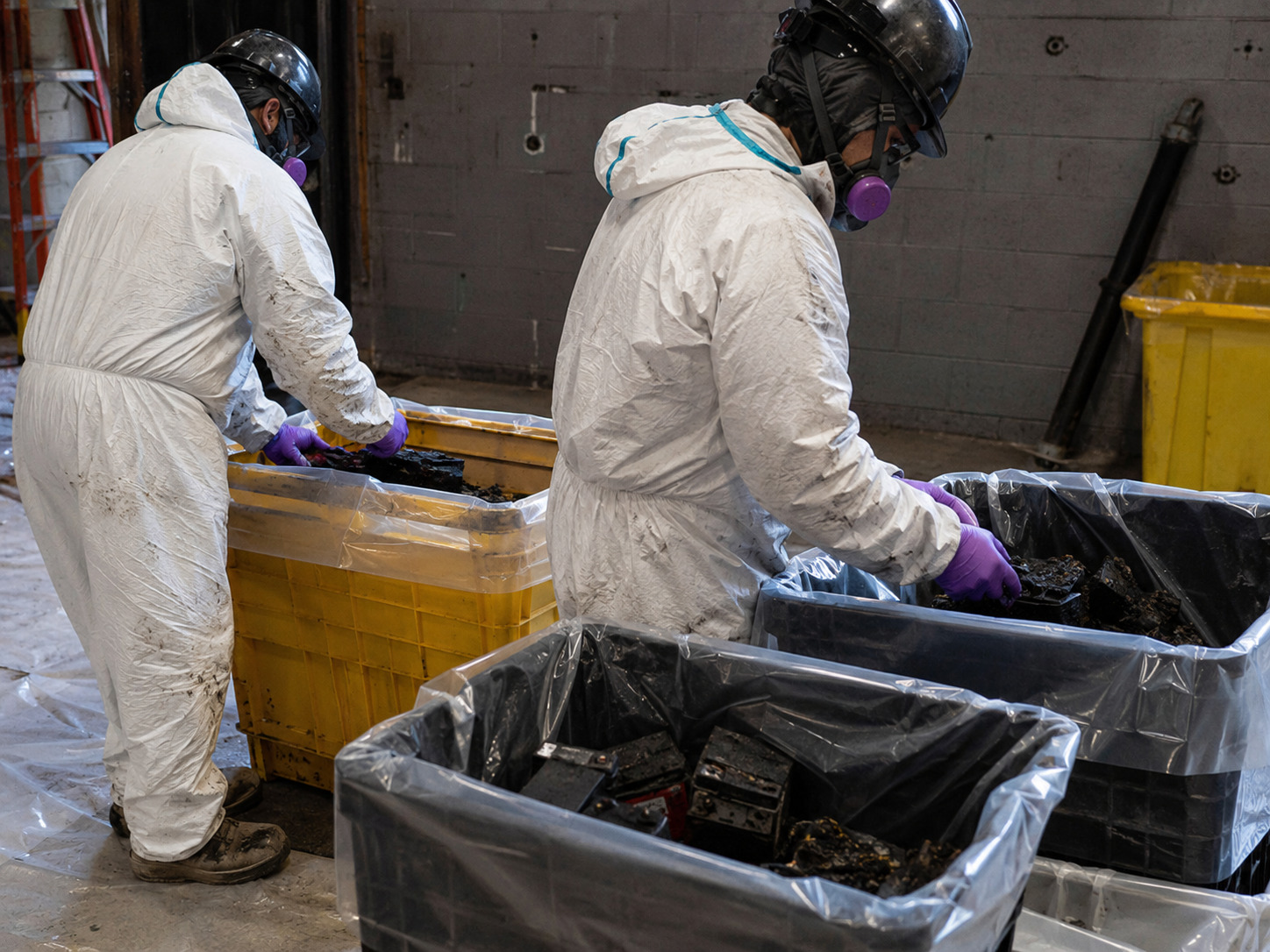
Battery debris is segregated and packaged per hazardous waste protocol before licensed transport.
Our team is available 24/7. One call gets experienced technicians on the way to your facility.
585-501-3606We know emergencies don't wait. That's why we don't either. Your call connects you to a real person who cares—not a voicemail. Within 60 minutes, our team is at your door, ready to stop the damage and start the restoration.
60-Min Response
We arrive fast, every time
Certified Experts
Expert crews, 24/7 ready
Always Protected
Licensed & insured