


Mold Removal & Remediation
Rochester, NY & Surrounding Areas
Expert mold inspection, containment, removal, and prevention. Our certified technicians eliminate mold safely and permanently, protecting your property and health.
Rochester, NY · Monroe County
Mold Remediation in Rochester, NY
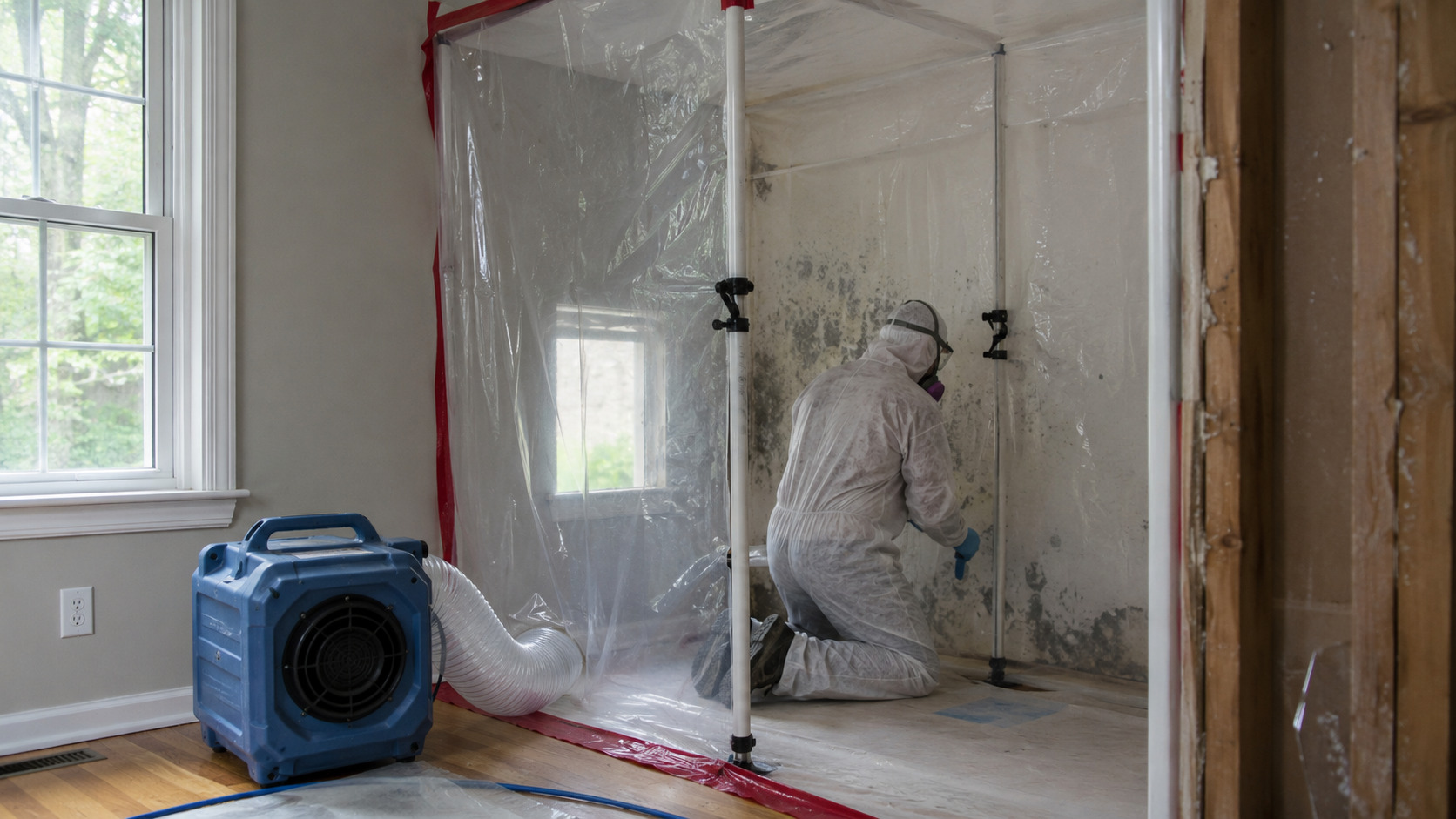
Rock Emergency provides mold remediation in Rochester, NY following New York State's Article 32 mold law: independent assessment first, then containment, HEPA air filtration, removal of affected material, and correction of the moisture source so growth does not return. Damp basements, attic condensation, and crawl spaces in Monroe County's older homes are where we find most Rochester mold problems.
- 69 Seneca AveRochester HQ · 14621
- HEPAContainment & filtration
- 15 townsBrighton to Webster
Our Promise to You
Answer your call immediately — real people, 24/7/365
Arrive within 60 minutes — fully equipped and ready
Treat your home like it is our own family property
Keep you informed throughout every step of the process
Handle all insurance paperwork, claims, and billing
Never leave until the remediation job is done right

Every Hour Matters
Mold spreads rapidly in humid conditions. Within 24-48 hours of water exposure, mold can begin colonizing surfaces. We respond quickly because fast action protects your home, your air quality, and your family's health.
You're Not Alone
Mold discoveries are stressful and overwhelming. Our team guides you through every step, answers your questions, and handles the pressure so you can focus on your family's safety and getting life back to normal.
We Actually Care
This is more than remediation work for our Rochester team. We help families recover from mold damage and treat every home with compassion, urgency, and the level of care your family truly deserves.
Our 8-Phase
Mold Remediation Process
Comprehensive approach from inspection to clearance testing
BY AREA OF THE HOME
Where Mold Shows Up in Rochester Homes
Four places account for almost every mold job we take in Monroe County. Each one fails for a different reason, and each one needs a different scope of work.
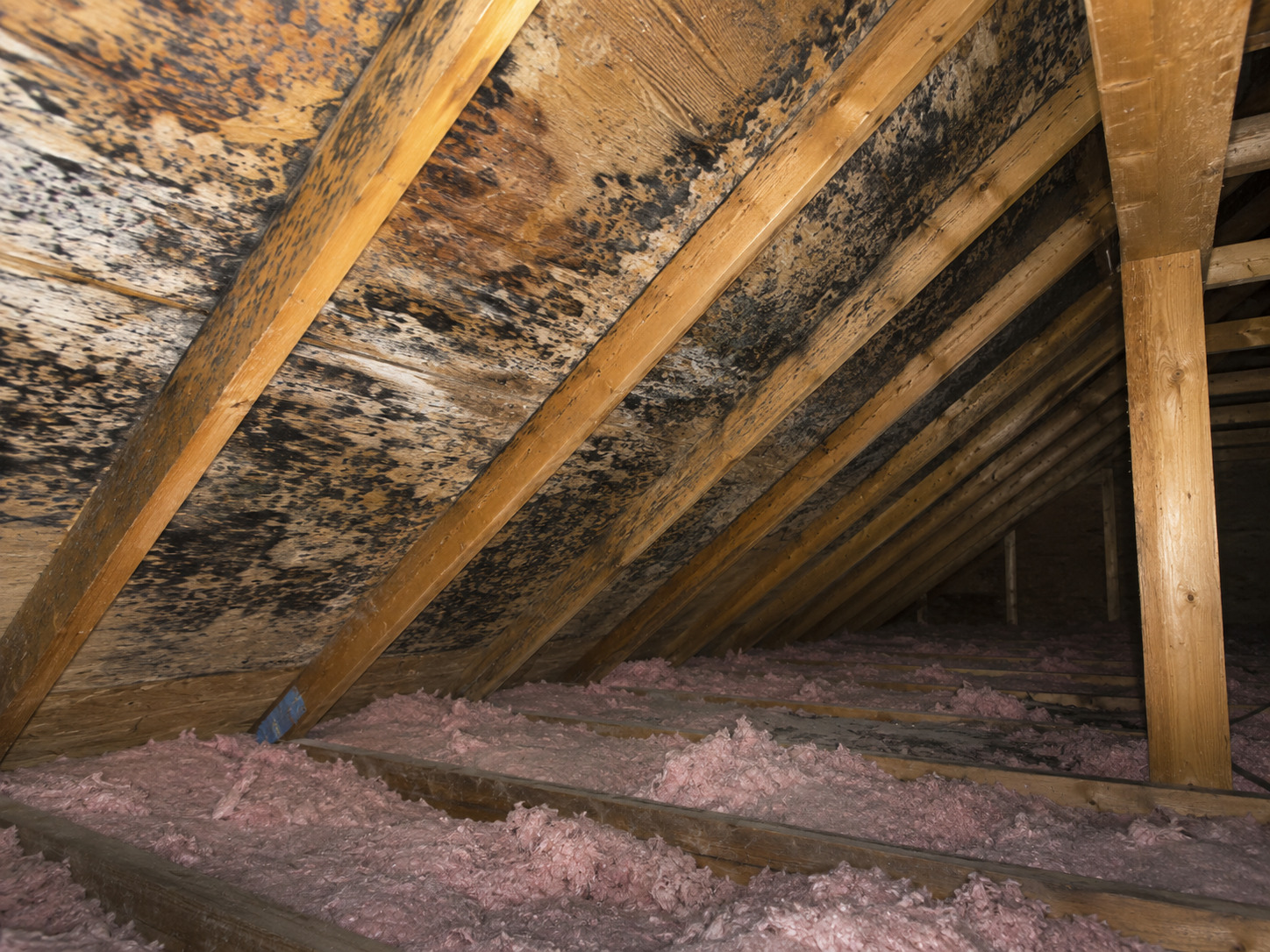
Above the ceiling
Attic Mold Removal
Attic mold in Rochester is usually a ventilation problem wearing a mold costume. Warm, damp air from the living space reaches a roof deck that sits below freezing for months, condenses on the underside of the sheathing, and feeds growth along the rafter bays. Most homeowners never see it until a roofer, a home inspector or an insurance adjuster puts a head through the hatch.
Why attics grow mold here
- Bathroom and kitchen fans vented into the attic instead of through the roof or soffit, which is the single most common cause we find.
- Ice dams through January and February forcing meltwater back under the shingles and into the sheathing.
- Soffit vents buried by blown-in insulation, which kills the intake side of the ventilation path while the ridge vent keeps pulling.
- Failed flashing around chimneys, vent stacks and valleys after a hard freeze-thaw winter.
- Insufficient insulation letting heated air rise into the attic all winter, so the sheathing never dries out.
What the work involves
- Containment at the attic hatch with negative air pressure so spores do not fall into the living space while we work.
- HEPA air scrubbers running throughout, and HEPA vacuuming of framing, sheathing and the top plate.
- Removal and bagging of contaminated insulation, which is porous and cannot be cleaned.
- Surface treatment of the roof deck and rafters, including abrasive cleaning where growth has set into the wood grain.
- Correcting the moisture source: rerouting fan ducts to the exterior, clearing soffit baffles, and flagging roof repairs for your roofer.
- Replacing insulation to the depth your ventilation path can support.
A full attic with containment and insulation removal typically falls in the $5,500 to $9,500 band.
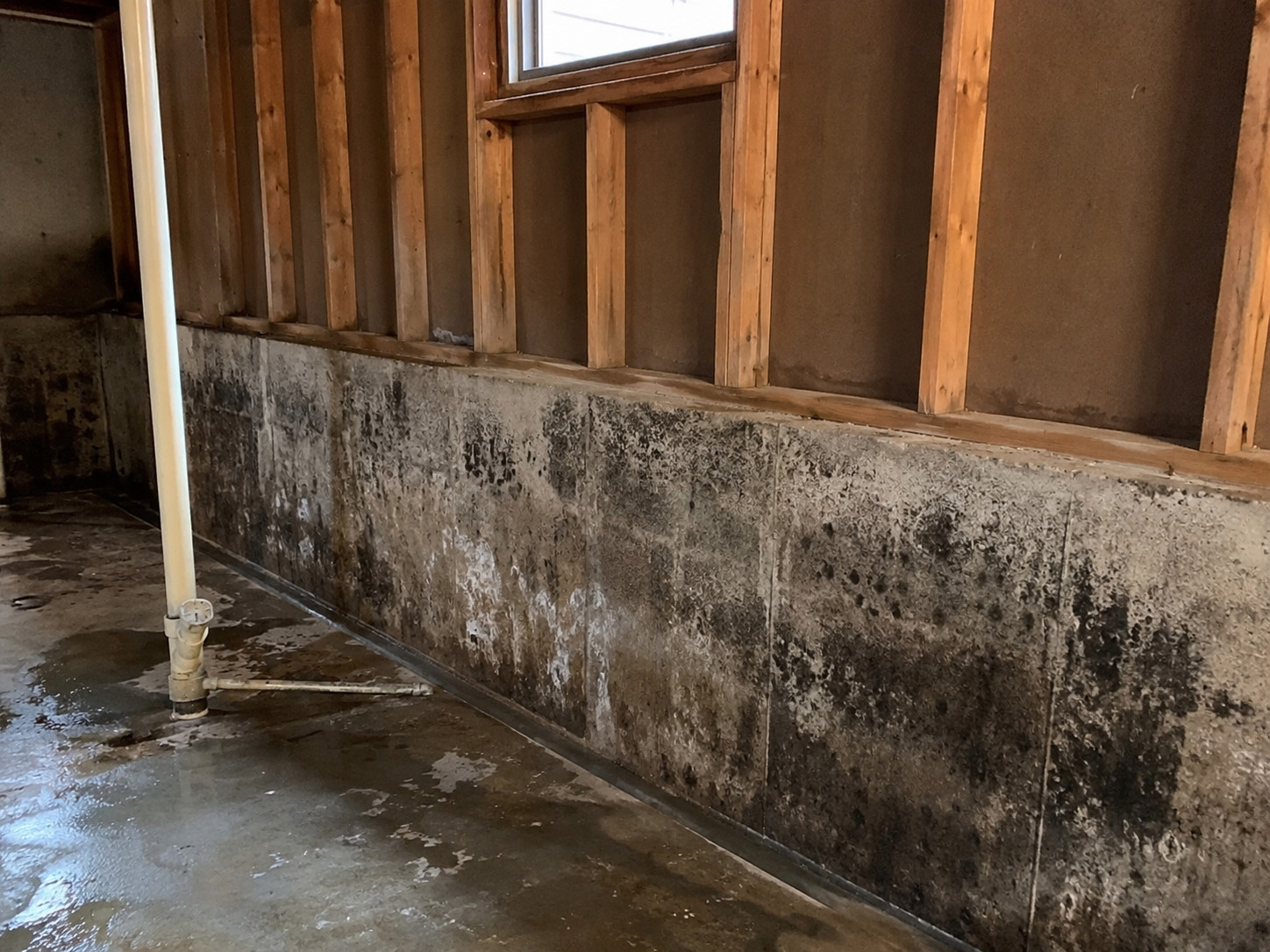
Below grade
Basement Mold Removal
Basements are the most common mold call we take in Monroe County, and the reason is simple physics. Below-grade walls stay cool all year. Rochester summer air holds a great deal of moisture. Push that air against a cool block wall and it condenses, and anything porous nearby starts growing within days. Add a spring thaw, a failed sump or a finished basement that hides the wall cavity, and the growth is well established before anyone smells it.
Why basements grow mold here
- Seepage through block foundation walls during the spring melt and heavy autumn rain.
- Sump pump failure or a discharge line that freezes and backs up in winter.
- Humid summer air meeting cool below-grade walls, which condenses without any leak at all.
- Clothes dryers venting into the basement rather than outside.
- Finished basements where studwall, carpet padding and drywall hide growth for months.
- Water heater and washing machine supply lines that weep slowly behind an appliance.
What the work involves
- Containment of the affected area with negative air, so the rest of the house stays clean.
- Removal of affected drywall, insulation, carpet and padding cut back to a clean margin beyond the visible growth.
- HEPA vacuuming and antimicrobial treatment of framing, block and slab.
- Structural drying with commercial dehumidification, monitored daily until materials reach dry standard.
- Treatment of salvageable contents, and disposal of porous items that cannot be saved.
- Written recommendations on the moisture source, whether that is grading, a sump, a gutter line or a supply leak.
A single affected room usually lands between $3,000 and $5,500. A full basement with containment and material removal runs $5,500 to $9,500.
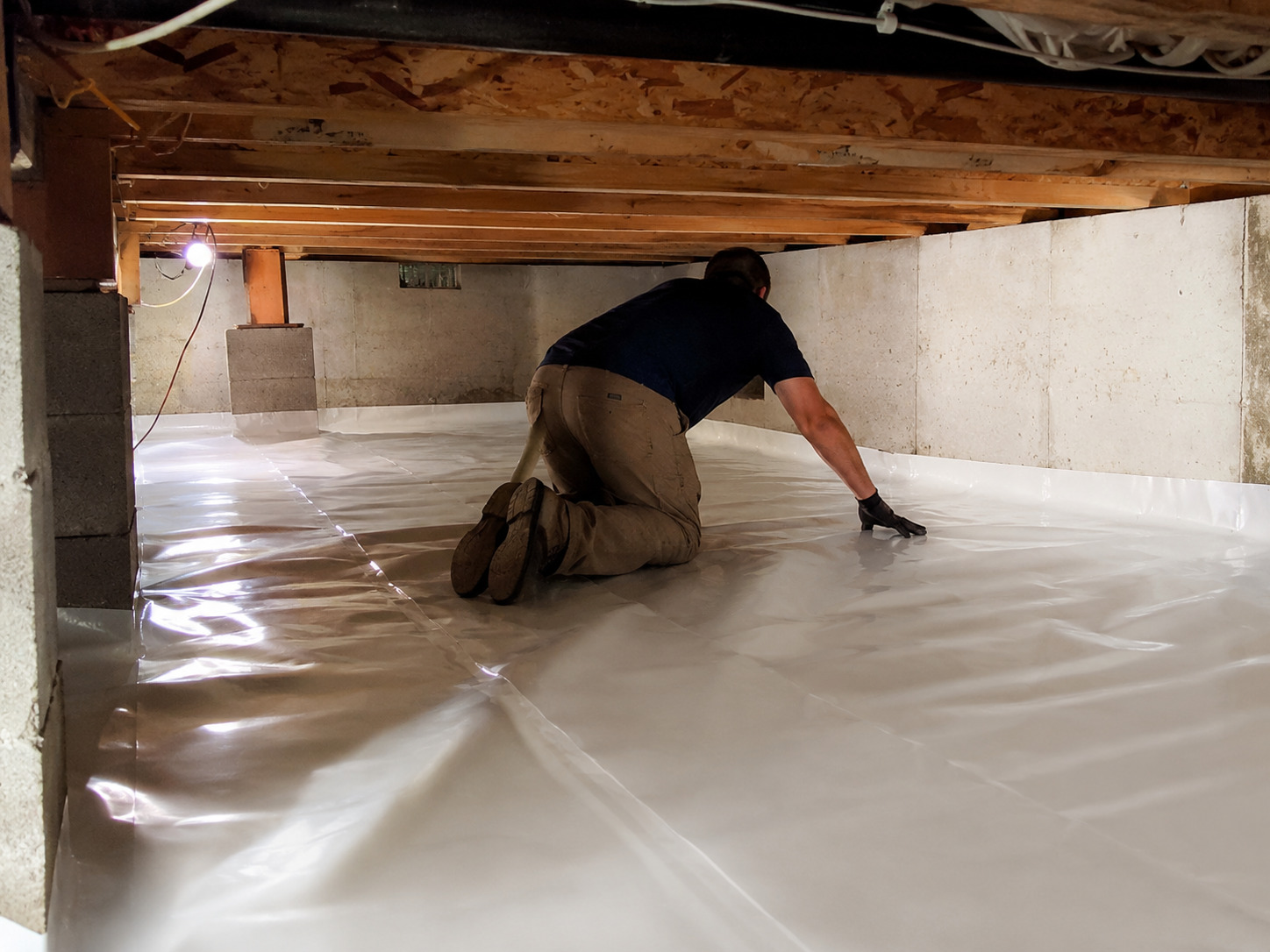
Under the floor
Crawl Space Mold Removal
A crawl space is the worst combination a building can offer mold: dark, unventilated, humid, and floored with organic material. It also sits directly beneath your living space, and the stack effect means air moves upward out of it all day. A crawl space problem is rarely contained to the crawl space, which is why musty odours upstairs so often trace back down here.
Why crawl spaces grow mold here
- Bare earth floors releasing ground moisture continuously into an enclosed space.
- Vapor barriers that were never installed, or that have torn, shifted or been cut by trades working under the house.
- Vented crawl spaces drawing humid summer air onto joists that stay cool, which condenses rather than dries.
- Plumbing leaks and condensation from uninsulated supply lines running through the space.
- Poor exterior drainage sending roof and surface water toward the foundation.
What the work involves
- Containment and negative air so the stack effect does not carry spores into the house during removal.
- Removal of contaminated insulation, debris and any failed vapor barrier.
- HEPA vacuuming and antimicrobial treatment of joists, subfloor and piers, with abrasive cleaning where growth has penetrated the wood.
- Installation of a new sealed vapor barrier, or full encapsulation where the space and budget support it.
- Dehumidification sized for a confined space, which is a different unit from a household dehumidifier.
- Insulation replaced with a material appropriate to a space that will stay cool.
Crawl space work including a new vapor barrier generally falls between $4,500 and $12,000, with encapsulation at the upper end.
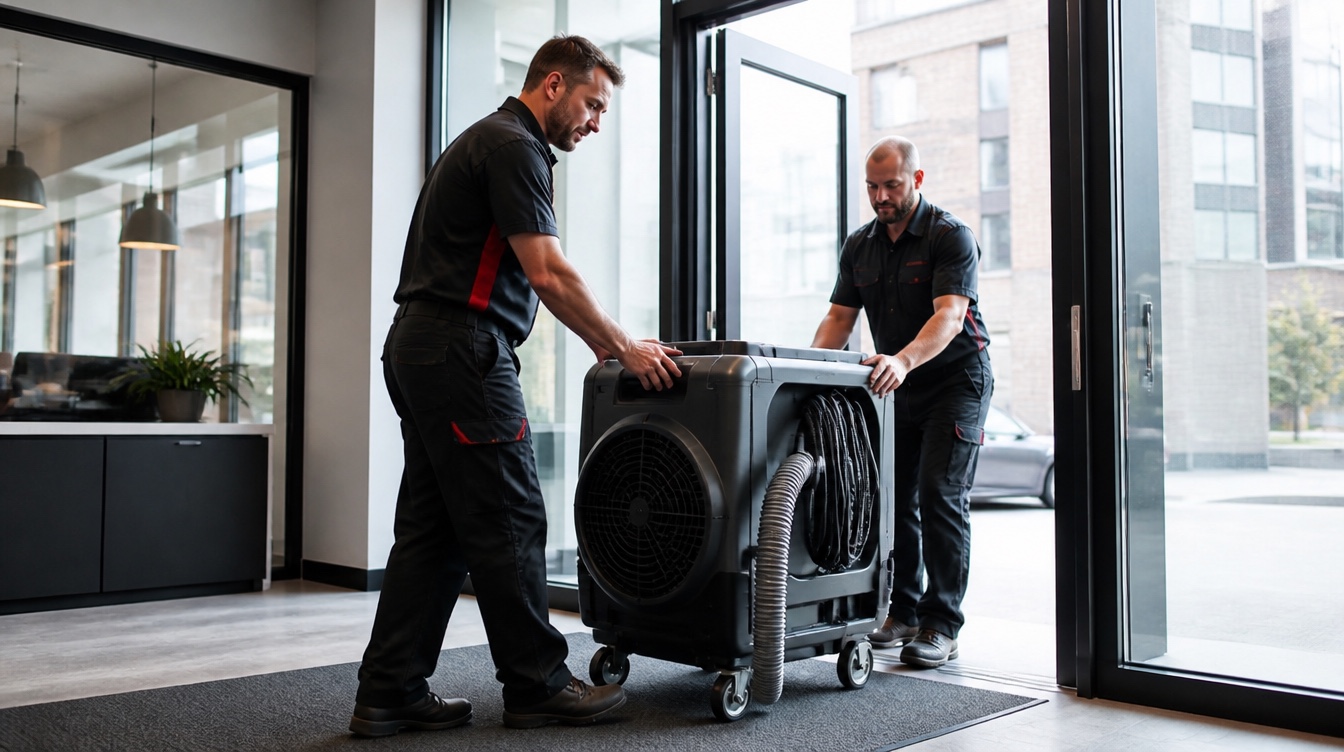
Through the air
HVAC and Ductwork Mold Removal
When mold reaches the duct system it stops being a room problem and becomes a whole-house one, because the furnace distributes it every time it runs. This shows up most often when the air handler sits in a damp basement or crawl space, or when uninsulated ducts sweat inside an unconditioned space. We remediate ductwork and HVAC components anywhere in the system.
Why duct systems grow mold here
- Air handlers located in basements and crawl spaces that already have a moisture problem.
- Condensation on uninsulated supply ducts running through unconditioned space in summer.
- Evaporator coils and drain pans that stay wet because the condensate line is blocked.
- Internally lined ductwork, where the fibrous liner holds moisture and cannot simply be wiped clean.
- Running the system during or after a water loss, which moves spores through the whole house.
What the work involves
- Isolating and shutting down the system before any other work begins, so remediation elsewhere does not seed the ducts.
- Sealing supply and return registers, with HEPA filtration running on the occupied side.
- Mechanical cleaning of accessible duct interiors, and removal of contaminated internal liner, which cannot be salvaged.
- Treatment of the plenum, coil housing and drain pan, and clearing the condensate path.
- Coordinating with your HVAC contractor where a coil, plenum or duct run needs replacing rather than cleaning.
- The system stays off until the work is finished and the moisture source is corrected.
Duct and HVAC remediation typically runs $1,200 to $4,000 per system, and is usually quoted alongside the area that caused it.
STRAIGHT ANSWER
What Mold Removal Costs in Rochester, NY
Most Rochester homes land between $1,500 and $9,500.
Above a single room, the usual basis is $10 to $20 per square foot of affected area. Below that, a fixed cost floor applies: containment, HEPA filtration, disposal and licensed labour cost the same whether the patch is ten square feet or forty. That is why our minimum for a contained job is $1,500, and why a quote that comes in far under it is usually skipping containment.
| Scope of work | Affected area | Typical price |
|---|---|---|
| Single contained area, surface growth | Under 50 sq ft | $1,500 – $3,000 |
| One room, porous materials removed | 50 – 150 sq ft | $3,000 – $5,500 |
| Attic or full basement, containment and material removal | 150 – 400 sq ft | $5,500 – $9,500 |
| Crawl space, removal plus new vapor barrier | Varies by footprint | $4,500 – $12,000 |
| HVAC and ductwork | Per system | $1,200 – $4,000 |
| Multi-area, or structural repair required | 400+ sq ft | From $10,000 |
Add $300 to $900 for the independent mold assessment. In New York, the company that writes your remediation plan cannot be the company that performs the remediation, so that is billed separately by a licensed assessor. We quote from their plan.
What moves the number
Affected square footage
The single biggest driver, and the number the assessor's remediation plan establishes before we quote.
What has to come out
Drywall, insulation, carpet padding and subfloor are porous and get removed. Framing, block and concrete are cleaned in place.
Containment complexity
An open basement is straightforward. An occupied house with an attic hatch in a bedroom closet takes longer to seal and protect.
Access
Crawl spaces with an eighteen-inch clearance and attics with no walkboards slow every stage of the work.
Drying time
Equipment runs until materials hit dry standard, which is measured daily rather than guessed at.
The moisture source
Correcting the cause is what stops regrowth. A blocked soffit vent is cheap. A failed sump or a regrade is not.
FROM OUR GOOGLE REVIEWS
What Rochester Homeowners Say
I had the pleasure of using Rock Emergency Services a couple weeks age on a basement that had a water back up. Great response from Paul and had the job done in a day. They had to empty the basement into a dumpster and then clean the floors and attack some mold spots. The crew put down cardboard on the floors so not to track debris on the stairs and floor when they emptied the basement. I would highly recommend these guys for your clean up needs. Hopefully I wont have use their services again but if I do Rock Emergency Services would be the first person I would call.
Rock absolutely exceeded my expectations when I needed help the most. After my basement flooded, they had equipment delivered and setup at my house within an hour—something I didn't even think was possible. That kind of rapid response immediately took a huge weight off my shoulders. From start to finish, their team was incredibly professional, responsive, and easy to work with. They clearly know what they're doing and took the time to make sure everything was handled properly so my basement could dry out as quickly and safely as possible. In a stressful situation, having a company that acts fast, communicates well, and genuinely cares makes all the difference—and Rock did exactly that. I couldn't recommend them more highly.
Unbelievable service! I called the plumber first then Rock. Plumber got there within half an hour and Rock within 5 minutes of that, incredible. Rock stopped by twice to check on equipments progress, and kept us totally informed about the progress. If there ever was or could be a positive outcome we just experienced it. Thank you Rock!!!
Common Mold Types We Remove
Expert identification and safe removal of all mold species
Black Mold (Stachybotrys)
Toxic mold producing mycotoxins
Aspergillus
Common indoor mold, allergenic
Penicillium
Blue-green mold, allergen producer
Cladosporium
Olive-green mold on fabrics
Alternaria
Dark mold in damp areas
Chaetomium
Cotton-like mold from water damage
Health Risks from Mold Exposure
Respiratory IssuesHealth Risk
Coughing, wheezing, asthma attacks
Allergic ReactionsHealth Risk
Sneezing, runny nose, skin rashes
Chronic ConditionsHealth Risk
Long-term lung problems
Immune SystemHealth Risk
Weakened immunity in vulnerable people
COMPLETE MOLD REMEDIATION
Complete Mold Remediation Services
From initial inspection to final clearance testing, our IICRC-certified team handles every phase of mold remediation. We use professional-grade HEPA equipment and EPA-approved antimicrobial treatments to safely eliminate mold, prevent regrowth, and restore your property to a healthy condition. Our comprehensive approach ensures nothing is missed — from containment to air quality verification — so you can return home with confidence.
- Mold Inspection & Air Quality Testing
- Mold Spore Containment
- HEPA Air Filtration & Cleanup
- Contaminated Material Removal
- Antimicrobial Cleaning & Sanitization
- Structural Restoration & Repairs
- Odor Elimination
- Post-Remediation Clearance Testing
RESIDENTIAL SERVICES
- Emergency Response
- Water Damage Repair
- Fire Damage Repair
- Mold Damage
- Storm Damage Recovery
- Water Removal & Extraction
- Smoke Damage & Soot Removal
- Mold Removal & Remediation
- Flood Damage Cleanup
- Contents Restoration
- Document & Media Recovery
- Environmental Services
- Asbestos & Lead Paint Abatement
- Biohazard Cleaning Services
- Industrial Shrink Wrap
Mold Remediation Frequently Asked Questions
Mold Remediation by Town
Local response times, neighborhoods, and housing-stock details for each Greater Rochester community we serve.
- Mold Remediation in Rochester, NY
- Mold Remediation in Brighton, NY
- Mold Remediation in Chili, NY
- Mold Remediation in East Rochester, NY
- Mold Remediation in Fairport, NY
- Mold Remediation in Gates, NY
- Mold Remediation in Greece, NY
- Mold Remediation in Henrietta, NY
- Mold Remediation in Hilton, NY
- Mold Remediation in Irondequoit, NY
- Mold Remediation in Penfield, NY
- Mold Remediation in Pittsford, NY
- Mold Remediation in Spencerport, NY
- Mold Remediation in Victor, NY
- Mold Remediation in Webster, NY