On this pageShow
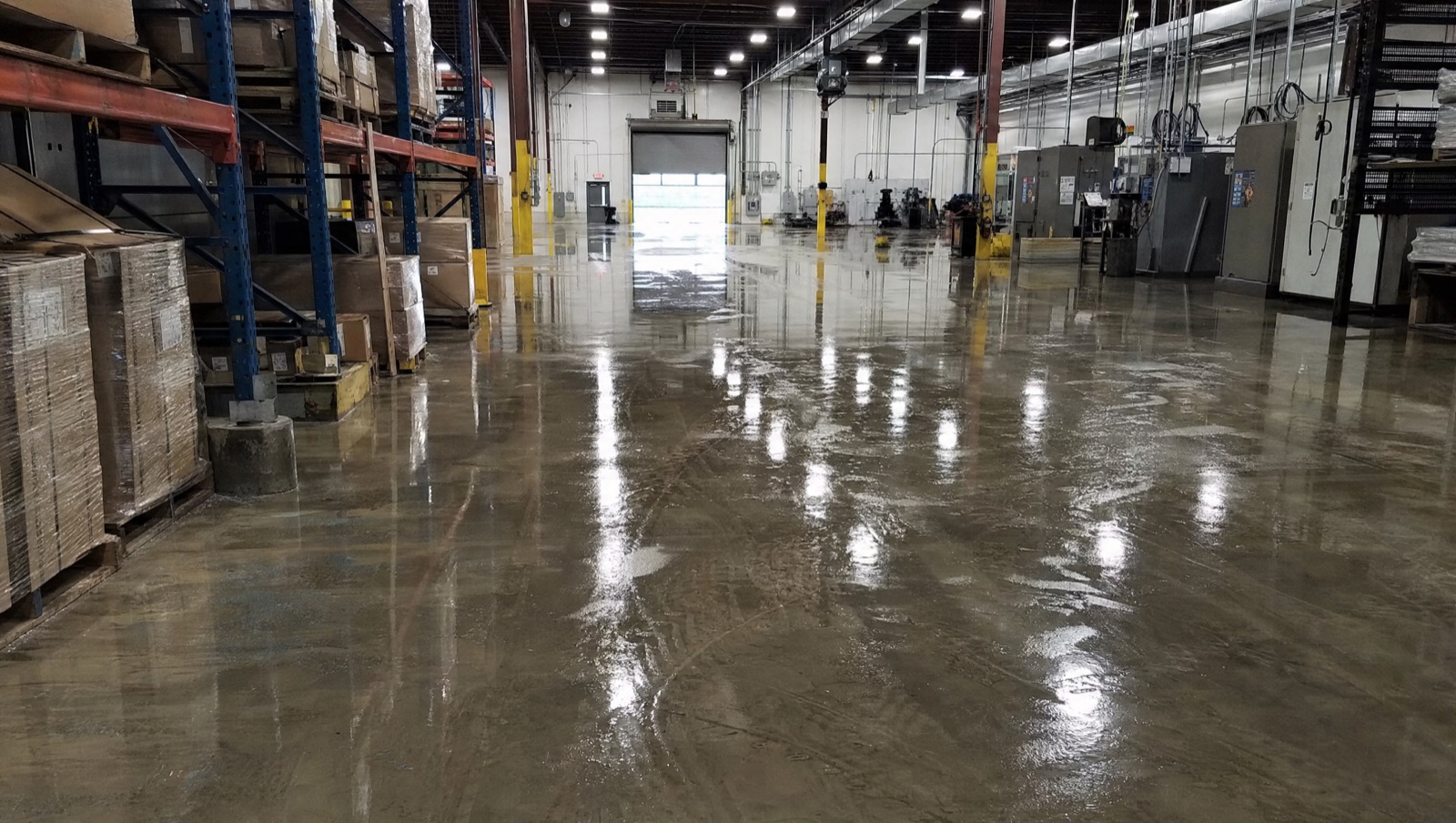
When a flash flood warning hits Monroe County, homeowners worry about basements. Plant managers worry about production. One afternoon of intense rain can put standing water across a warehouse slab, soak lower-rack inventory, trip electrical gear, and idle a line that was booked solid for the week.
Rock Emergency Services Inc. (69 Seneca Ave, Rochester, NY 14621) is the locally owned restoration company behind this article — not Rock Environmental (rockenv.com). We dispatch 24/7 for basement flood cleanup across Rochester, Greece, Webster, Henrietta, and Irondequoit. Call 585-501-3606.
After Rochester’s July 18 severe storms (and with more thunderstorm chances through July 21–22), commercial property teams are asking for a practical playbook: what fails first in a factory or warehouse flood, how to protect people, and how to get operations back without creating a mold or compliance nightmare. This article is written for facility managers, EHS leads, and business owners across Western New York manufacturing, distribution, and light industrial sites.
Rock Emergency already works these losses: high-volume extraction, industrial drying, documentation for insurers, and rebuild coordination so you are not juggling five vendors while the floor is still wet. Start with commercial water damage and industrial manufacturing restoration if you need the service map up front.
Key Takeaways
- Flash floods hit commercial sites through dock doors, roof drains, site grading, and overwhelmed storm laterals, not only through “basement” spaces.
- Downtime and inventory often cost more than the drywall. Speed and documentation matter as much as pumps.
- Electrical, forklift lanes, and chemical storage change the safety profile of every gallon on the floor.
- EPA and FEMA flood guidance still applies: protect people first, treat floodwater as potentially contaminated, and dry structure and contents before mold sets in.
- Rock Emergency scales residential lessons to industrial reality with commercial extraction, climate control, and contents handling.
How Flash Floods Reach Factory and Warehouse Floors
Industrial sites look tough. Water does not care. Typical Western New York failure points include:
- Loading docks and grade-level doors where ponding in the truck court sheets inward under thresholds
- Roof drain and gutter backups that dump onto parapets and find masonry cracks or roof-to-wall joints
- Yard grading and retention issues that push stormwater toward the building instead of away
- Underslab or trench drain surcharges during peak rainfall
- Mezzanines and lower-level offices or break rooms that behave like residential basements when water finds stairs and utility penetrations
- Adjacent creek or ditch overflow during the same convective storms that trigger county flash flood warnings
On July 18, regional flash flood warnings covered a wide footprint around Rochester while tornado warnings and wind damage complicated response. For a plant already running lean shifts, that combination means delayed vendors, limited generator fuel runs, and a scramble to protect CNC machines, food-grade areas, or paper inventory before the second pulse of rain arrives.
Damages That Hurt Operations Fast
- Inventory on lower pallet positions wicked from cardboard and stretch wrap
- Electrical panels, busways, and machine bases exposed to conductive water
- Floor coatings and joints that delaminate or telegraph moisture into adhesive systems
- Office buildouts inside the warehouse with drywall, carpet tile, and furniture
- Compressed air and process equipment contaminated by humid, dirty air during outages
- Hygiene-sensitive zones in food, medical, or clean-assembly spaces that require more than a push broom
Even a half-inch of water across 40,000 square feet is not a janitorial job. It is a moisture-control project with safety, insurance, and production implications.
Food processors, medical suppliers, and electronics assemblers face an extra layer: product disposition decisions. Once corrugated packaging wicked floodwater, the SKU may be unsellable even if the unit inside looks fine. Build a quarantine lane early so salvage decisions are deliberate, photographed, and aligned with your quality system, not improvised at 2 a.m.
Life Safety and Compliance Before the Mops Come Out
Federal flood guidance starts with people. Ready.gov tells the public to avoid floodwaters, heed evacuation orders, and move to higher floors when needed. Inside a plant, that translates to:
- Account for employees and contractors; move staff out of flooded electrical rooms and pits.
- Lock out equipment that may have been wetted; do not “try the breaker” to see what works.
- Treat floodwater as potentially contaminated until characterized, especially near sanitary drains or outdoor chemical storage.
- Watch for carbon monoxide hazards if temporary generators are brought online. EPA flood cleanup materials stress outdoor generator placement away from doors and intakes.
- Document conditions for OSHA-minded safety notes and for the insurance claim before demolition begins.
The First 12 Hours: A Facility Manager Checklist
- Stabilize the scene. Barricade slip hazards and energized wet zones.
- Stop additional inflow with door dams, sandbags, or temporary sealing where safe.
- Call commercial extraction early. Portable shop vacs do not move industrial volumes.
- Protect critical assets. Elevate or wrap priority inventory; stage salvageable SKUs for contents drying.
- Photograph and map water depth, affected bays, and serial-number equipment.
- Notify insurer and corporate risk with a single point of contact on site.
- Plan drying, not just removal. Air movers and commercial dehumidifiers prevent the secondary mold wave that shuts you down again in a week.
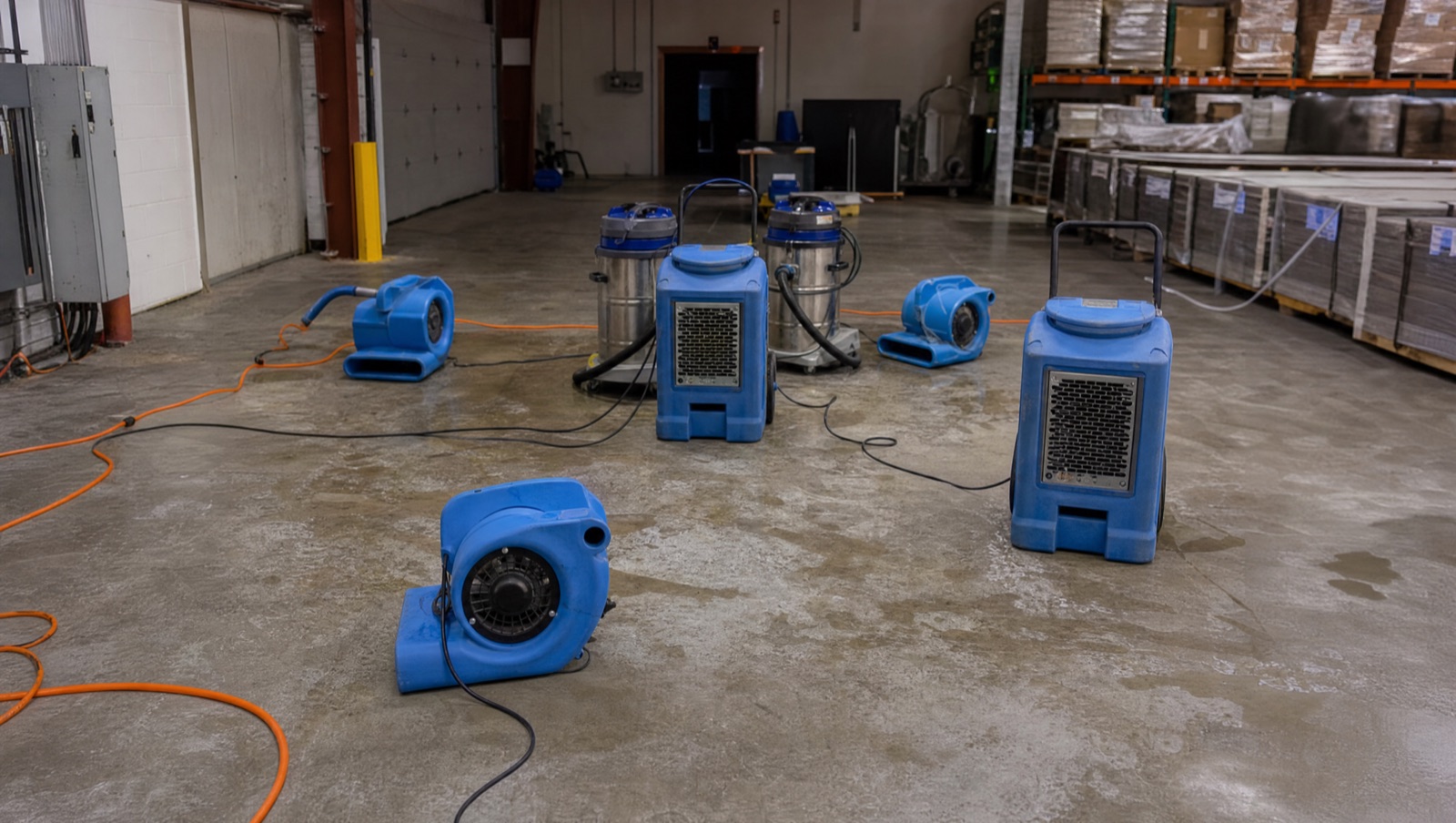
What Professional Commercial Flood Recovery Looks Like
Rock Emergency’s commercial crews size equipment to the footprint. Truck-mounted and portable extractors pull standing water. We set drying zones, monitor grains-per-pound and material moisture, and adjust airflow daily. Where offices or break rooms were hit, we apply the same disciplined structural drying we use on residential losses, then coordinate rebuild so production offices are usable again.
Related services that often ride along on industrial flash flood jobs:
- Commercial water removal and extraction
- Commercial flooded basement cleanup for lower levels and utility plants
- Climate control for temporary dehumidification and air management
- Contents restoration for salvageable inventory and equipment
- Commercial mold remediation when the response was delayed
- Commercial storm damage when wind and roof issues arrived with the rain
Insurance, Business Interruption, and Documentation
Commercial policies vary. Flood from rising surface water may sit outside a standard property form and require separate flood coverage. Sewer backup, named-storm deductibles, and business interruption endorsements change the claim conversation. What never changes is the value of a clean timeline: when water entered, what was done in hour one, moisture logs, and photos tied to bay locations.
We work with adjusters regularly and can keep mitigation invoices and drying records organized so you are not rebuilding the story from memory two weeks later.
Prevention Moves Worth Making Before the Next Warning
- Walk the site during a heavy rain and watch where water actually goes.
- Maintain roof drains and keep dumpster pads from blocking flow paths.
- Inspect dock seals and door thresholds.
- Elevate critical spares and cardboard off the slab in flood-prone bays.
- Confirm generator transfer plans for sump and ejector pumps.
- Pre-qualify a 24/7 restoration partner so procurement is not starting from LinkedIn during a warning.
Working With Rock on an Active Loss
When you call, tell us square footage affected, whether power is safe, whether the water may include sewage, and whether production must resume in adjacent bays. We dispatch with extraction capacity scaled to commercial slabs, set a drying plan you can show an adjuster, and keep one project lead as your point of contact so second- and third-shift supervisors are not reinventing instructions.
If your floor is wet today, or you want a restoration partner on speed dial before the next WEA alert hits employee phones, call Rock Emergency at 585-501-3606 or contact us online. We respond across Rochester, Monroe County, and New York State with the equipment and documentation industrial losses demand.
FAQ
Can we keep shipping from dry bays while one aisle is flooded?
Sometimes, if electrical safety, forklift paths, and contamination controls allow it. That decision should involve EHS and the restoration lead, not just production pressure. Cross-contamination and slip hazards can turn a partial reopen into a bigger incident.
How fast can mold start in a humid warehouse?
On porous packaging, drywall offices, and wood pallets, mold risk rises sharply after 24 to 48 hours of damp conditions. Metal buildings still have plenty of organic materials inside. Drying is not optional.
Do you work after hours and weekends?
Yes. Flash floods ignore business hours. Rock Emergency provides 24/7 emergency response so extraction can start while water is still manageable.