
On this pageShow
Summer thunderstorms test every Rochester roof. Wind-driven rain finds failed flashing, aging shingles, and clogged gutters. By the next morning you may see a tan or yellow ring on drywall—sometimes with a soft center ready to collapse.
Rock Emergency Services Inc. (69 Seneca Ave, Rochester, NY 14621) is the locally owned restoration company behind this article — not Rock Environmental (rockenv.com). We dispatch 24/7 for basement flood cleanup across Rochester, Greece, Webster, Henrietta, and Irondequoit. Call 585-501-3606.
Ceiling stains are a symptom, not the full problem. Water often travels along joists and insulation before it shows. Rock Emergency helps homeowners stop active intrusion, dry the assembly, and coordinate repairs so mold does not take hold in the cavity.
Key Takeaways
- Stains lag behind leaks — The wet insulation above may be larger than the ring you see.
- Do not ignore a small mark — Repeated storms re-wet the same cavity and feed mold.
- AC condensate mimics roof leaks — Second-floor stains under air handlers are common in summer.
- Paint is not a fix — Sealing over damp drywall traps moisture.
- Document for insurance — Photo the stain, attic, and exterior after each storm.
Common Summer Causes in Rochester
- Wind-lifted shingles and failed pipe boots
- Step flashing leaks at dormers and chimneys
- Gutter overflows dumping water behind fascia
- Skylight gasket failures in hard rain
- AC condensate overflows—see condensate leak guide
Safety Before Cleanup
If the ceiling bulges, keep people clear—water-logged drywall can fail suddenly. Place a bucket under active drips. If light fixtures are wet, shut off power to that circuit. Avoid attic entry during lightning or if the floor decking feels soft.
Inspect, Dry, Then Repair
- Find and stop the exterior or mechanical source (roofer/HVAC as needed).
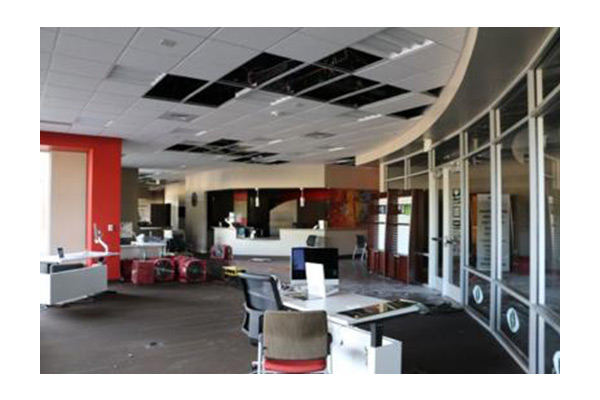
- Open the ceiling only when safe, or let pros create drying ports.
- Extract and dry with commercial equipment until meter readings hit target.
- Replace unsalvageable drywall and insulation.
- Complete cosmetic repairs only after dryness is verified.
For broader water response, use our water damage restoration service and the 48-hour mold clock timeline.
Mold Risk Above the Ceiling
Warm attic air plus wet paper-faced drywall is a mold incubator. Musty odors in upstairs bedrooms after storms deserve cavity inspection—not just a coat of Kilz. If growth is visible, shift to contained mold remediation.
FAQ
Should I poke a hole to drain the blister?
If collapse is imminent and you can do so safely with eye protection and a catch basin, controlled draining can reduce damage—but you still need professional drying and source repair. Do not leave wet insulation in place.
What if the stain is old and dry?
Monitor after the next storm. If it darkens or grows, the leak is active. Thermal or moisture inspection can confirm hidden dampness.
What to Look for in the Attic
From a safe platform, look for darkened sheathing, wet insulation, daylight through roof decking, and dampness around penetrations. Insulation that is matted has lost performance and may need removal for drying. Do not step on drywall ceilings—joists only.
Infrared cameras can help find wet zones, but meter confirmation remains essential before closing assemblies.
Temporary Protection Until Roofers Arrive
If shingles are missing after a storm, temporary tarping limits further intrusion while you dry interiors. Coordinate tarp work with drying so crews are not working at cross purposes. Interior fans alone will not outpace an open roof during another thunderstorm.
Document exterior damage for insurance the same day when weather allows safe photos.
Historic and Plaster Ceilings
Older Rochester homes with plaster and lath behave differently than drywall. Plaster can hold moisture and fail in sheets. Drying strategies and repair trades differ—budget time for plaster specialists after moisture is controlled.
Coordinating Roofers, Restorers, and Insurance
Roofing repairs stop future water; restoration dries what already entered. When both trades work the same week, sequence them: emergency tarp if needed, interior mitigation, then permanent roofing, then final interior rebuild. Skipping mitigation while waiting on a roofing crew during a rainy forecast invites mold in the cavity.
Provide both contractors with the same photo set. If insurance is involved, confirm what is authorized before tear-off expands. Wind damage may be treated differently than long-term wear—your adjuster will look for storm-related openings.
Keep a moisture log until ceilings are closed. Paint is the last step, not the first.
Exterior Prevention That Protects Ceilings
Roof tune-ups before peak thunderstorm season catch brittle caulk and lifted flashing. Keep gutters clean after June seed drop and August storms. Trim back branches that scour shingles in high wind. On flat or low-slope sections common to additions, watch for ponding after rain—those areas leak differently than steep gables. Small exterior dollars prevent large interior drying invoices.
Practical Details for Ceiling Water Stains After Summer Thunderstorms
Local conditions across Monroe County vary: older city foundations, suburban finished basements, and rural crawl spaces each fail differently in humid weeks. The unifying rule is the same—control moisture fast, verify dryness with measurements, and do not close assemblies until they are truly ready. Rock Emergency crews bring extraction, drying, and mold capabilities together so you are not coordinating three vendors during a stressful summer loss. If you are unsure whether your situation is DIY-safe, err on the side of a professional assessment; inspections are cheaper than tear-outs that could have been avoided with earlier drying. Keep notes, photos, and equipment settings so everyone—from adjusters to family members—understands what was done and why.
For 24/7 help in Rochester and across the Finger Lakes, call 585-501-3606 or contact Rock Emergency online. We handle water extraction, structural drying, mold inspection, and remediation under one accountable team.